17onnie's pick · Updated August 2026
380W USB-C Charging Station
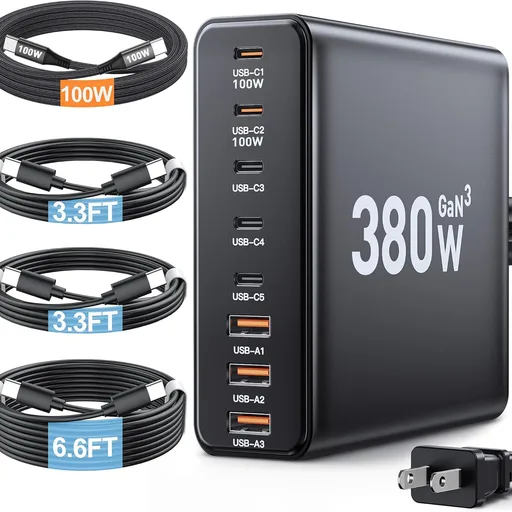
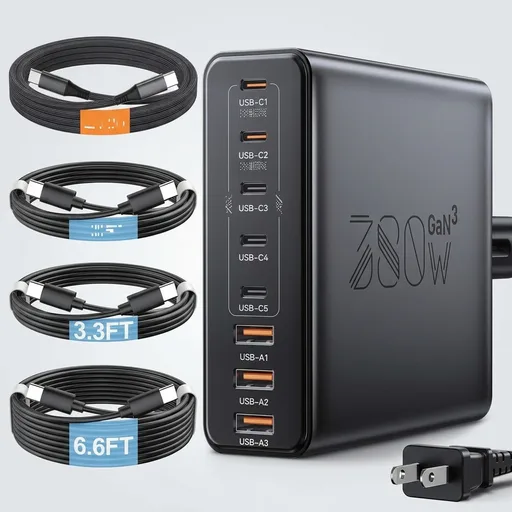
A charging station like this makes the most sense for someone who has a desk full of devices, a shared workspace, or a travel setup that keeps growing into a tangle of separate wall bricks. The appeal here is simple: one unit can replace several chargers, and the mix of USB-C ports, included cables, and high wattage may be useful if you want to keep laptops, tablets, phones, and accessories in one place instead of spreading them across the room.
The 380W rating is the kind of number that gets attention, but the practical question is how that power is distributed when multiple devices are plugged in at once. That is the first thing to check in the product details, especially if the main use case is charging a laptop alongside a phone or two. With high-output charging gear, the headline wattage matters less than the per-port behavior, the shared output limits, and whether the charger can actually deliver the speed each device expects.
The included four USB-C cables are another point worth looking at carefully. For some buyers, that is a nice convenience because it reduces the need to match the charger with separate cords right away. For others, the more important question is cable length, cable quality, and whether the pack includes the connectors needed for the devices already on hand. If the goal is a cleaner desktop, the cable bundle may help. If the goal is flexible placement, the bundled cables may or may not be the right lengths.
Who this is for comes down to organization as much as power. It may suit someone who wants a central charging spot for a home office, a dorm, a studio apartment, or a family counter where several devices end up charging in the same place. It could also be a fit for people who prefer USB-C-first charging and want fewer separate bricks taking up outlets. By contrast, someone who only charges a phone overnight may not need this much capacity, and a smaller adapter would probably be simpler.
Another thing to verify is device compatibility. The title suggests dual 100W charging support and MacBook Pro use, but buyers should still confirm whether their specific laptop model, tablet, or accessory can negotiate the fast-charge profile they expect. That is especially important with newer USB-C devices, older phones, and anything that is picky about power delivery. A charger can have impressive specs on paper and still be a poor fit if the port mix or charging protocol does not line up with the devices you actually own.
The physical setup also deserves a quick check. An 8-port charging station can be great on a desk or shelf, but only if the footprint, cord routing, and port spacing work in the space where it will live. If the charger is going into a bag or moving between locations, size and cable management become more important than the raw wattage. These are not flaws so much as the normal tradeoffs of a higher-capacity charging block.
The evidence here is limited to the listing details, so this is best treated as a fit check rather than a performance verdict. The feature set points toward a useful desktop or multi-device charging hub, but the buyer should still compare the actual power split, port layout, cable lengths, and charging standards against the devices they plan to plug in.
In the end, this looks like a reasonable option for someone who wants a single charging station to handle several USB-C devices at once and is willing to verify the details before buying. If the ports, wattage sharing, and included cables line up with the setup you already have, it may be a practical way to reduce clutter and keep charging in one place.
Amazon product links on this guide are not currently affiliate links. Neither 17onnie nor Buyer Field Guide earns an affiliate commission from them.
See current price